

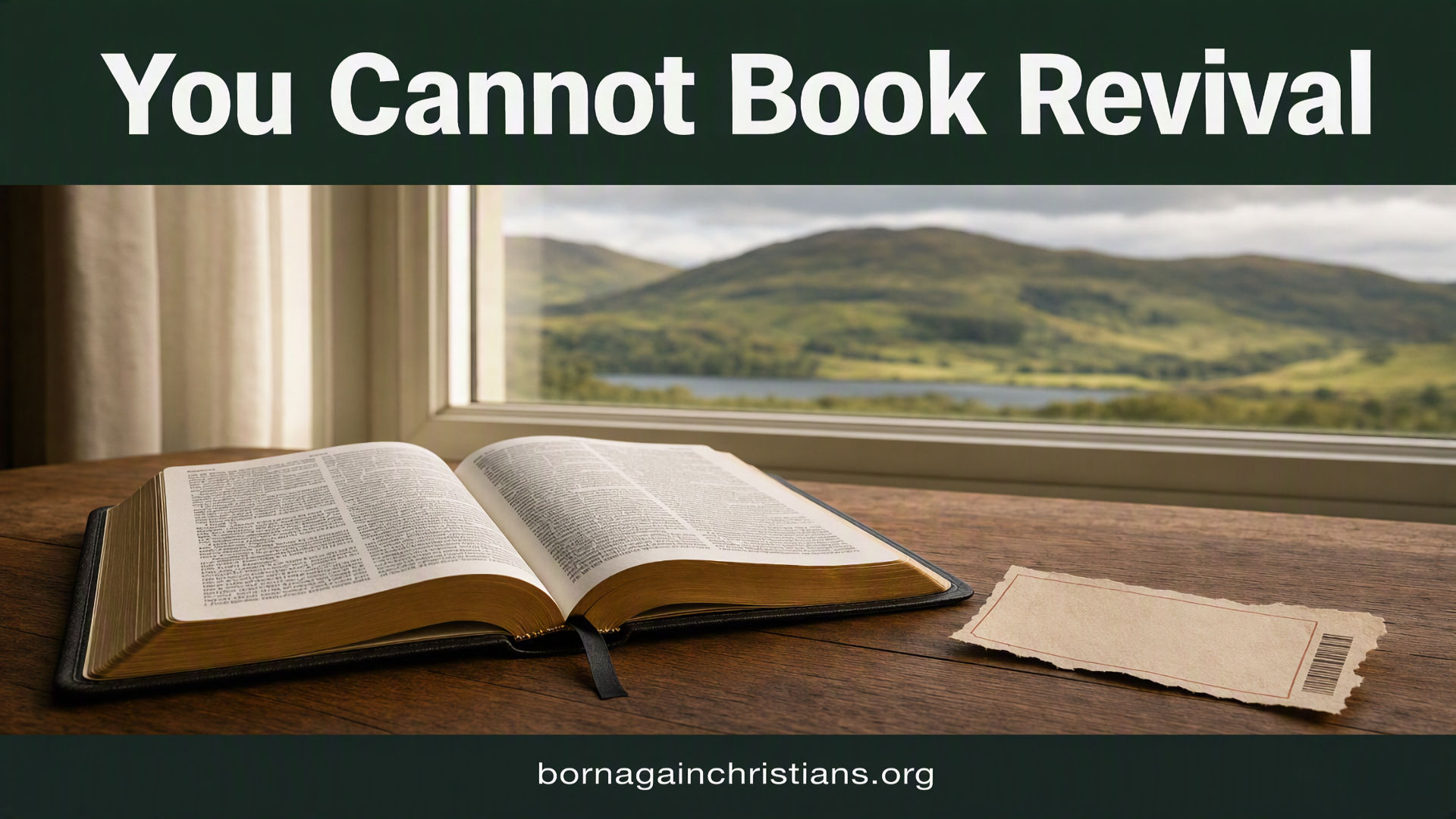
You know, folks, I've been thinking a lot lately about what real revival looks like. Not the kind you put on a calendar with guest speakers lined up and a short series on breakthrough and motivation. However, those aren't wrong in themselves, but the kind that comes suddenly, sovereignly, when God's people get desperate enough to pray and humble themselves before Him.
My heart's been burning over the awakening that swept through Scotland from 1859 through 1861. It wasn't something anybody planned or promoted. It started with reports filtering in from America, the prayer meetings in New York that turned into a nationwide move, and then from Ulster in Ireland, where thousands were coming to Christ in deep conviction. Those stories reached hungry hearts in Scotland, and God just... moved.
Prayer meetings began popping up everywhere. In one denomination alone, they doubled in number almost overnight, and attendance kept climbing, sometimes holding strong for years afterwards.
In Glasgow, it became the centre of it all. A preacher from Ireland, John Horner, shared what God was doing across the water in July 1859 at the Religious Institution Rooms, and people started weeping right there in the room, gripped by their own sin. Meetings overflowed the buildings, spilled into the streets, and on August 19, 1860, thousands gathered on Glasgow Green in open air.
The Spirit came down so strong that some folks fell under conviction like they were struck, carried into nearby churches as though lifeless until God met them.
It wasn't just one city. It touched every corner of the land, from Aberdeen up north where it stirred as early as late 1858, to the fishing villages along the coast, the mining towns, the southwest near Ireland, even out to the Borders with fresh waves into 1861.
Denominations didn't matter much; the Free Church and the United Presbyterians saw it most strongly, but it crossed lines. Rich and poor, workers and professionals, God was drawing people from every walk.
What marked it? Deep, piercing conviction of sin. Folks weren't chasing an emotional high; they were broken over their guilt, confessing openly, making restitution where they'd wronged others, turning from drunkenness and vice. Crime rates sharply dropped in places, and drunkenness convictions fell by more than half in some areas over just a few years.
Churches filled up and new believers joined by the thousands (some say tens of thousands across Scotland), family worship came back, Scripture reading increased, Sunday schools grew, and missions took off with fresh zeal.
It wasn't hype; it was holy living that lasted.
This fire didn't come out of nowhere. Faithful intercessors had been crying out for years, influenced by the legacy of men like Robert Murray M'Cheyne and his close friends, the Bonar brothers, Andrew Bonar and Horatius Bonar. M'Cheyne, who went home to glory in 1843 at just 29, lived a life of intense prayer and holiness that prepared the soil in places like Dundee.
His circle, including William Chalmers Burns (who saw revival break out in Dundee under his supply preaching in 1839), sowed seeds of expectancy. Though M'Cheyne never saw the 1859 awakening, his influence lingered: a hunger for God's presence, not mere excitement.
Now, compare that to a lot of what we see today. You hear about "revival nights" planned out, Wednesdays for a few weeks, special speakers flying in, worship cranked up to stir the feelings, messages on personal breakthrough and believing for more.
It's sincere, no doubt, and God can use anything. But my spirit gets uneasy when the emphasis shifts to getting carried away in the emotion, to chasing that rush during the singing or the altar call, rather than facing sin head-on and surrendering completely to the Lord.
I've felt it myself, listening late at night to online services, the music and words pulling me in, and suddenly I am swept up. It is not bad to feel God's presence but annoys my wife sleeping beside me wakening up with my arms in the air, but when the goal becomes the feeling itself, we can miss the real thing: the sober work of the Spirit convicting us, cleansing us, changing us from the inside out.
True revival is not manufactured in a series of meetings, it is truly born in hidden, persistent prayer, like those faithful ones in Scotland who kept crying out long before the fire fell.
Remember what the Lord said through the prophet: "Not by might, nor by power, but by My Spirit, says the Lord of hosts" (Zechariah 4:6). And again, "If My people who are called by My name will humble themselves, and pray and seek My face, and turn from their wicked ways, then I will hear from heaven..." (2 Chronicles 7:14). That's the pattern we see in 1859 Scotland, just like in other true movings of God.
So where does that leave us? My heart burns for that kind of awakening again, especially in places like Scotland, where the land once sent out men of prayer to carry the gospel far and wide. But I grow careful around anything that feels more like a production than a surrender.
If something stirs your hunger, don't chase the next big gathering. Get alone with the Lord, draw a circle around yourself and pray, as I say at times, "Lord, if this is of You, let Your Spirit move sovereignly, convict me first, break me, fill me, use me.
Begin the real work right here." Prayer changes us more than anything else, today I got a t-shirt for my birthday that said, “Prayer Changes Things”.
Prayer aligns our hearts with His will, and that is where revival starts, not in crowds, but in surrendered lives.
God is still the same. He is more ready to pour out His Spirit than we are to seek Him.
Let's not settle for less than the real thing.
Peter





Add comment