

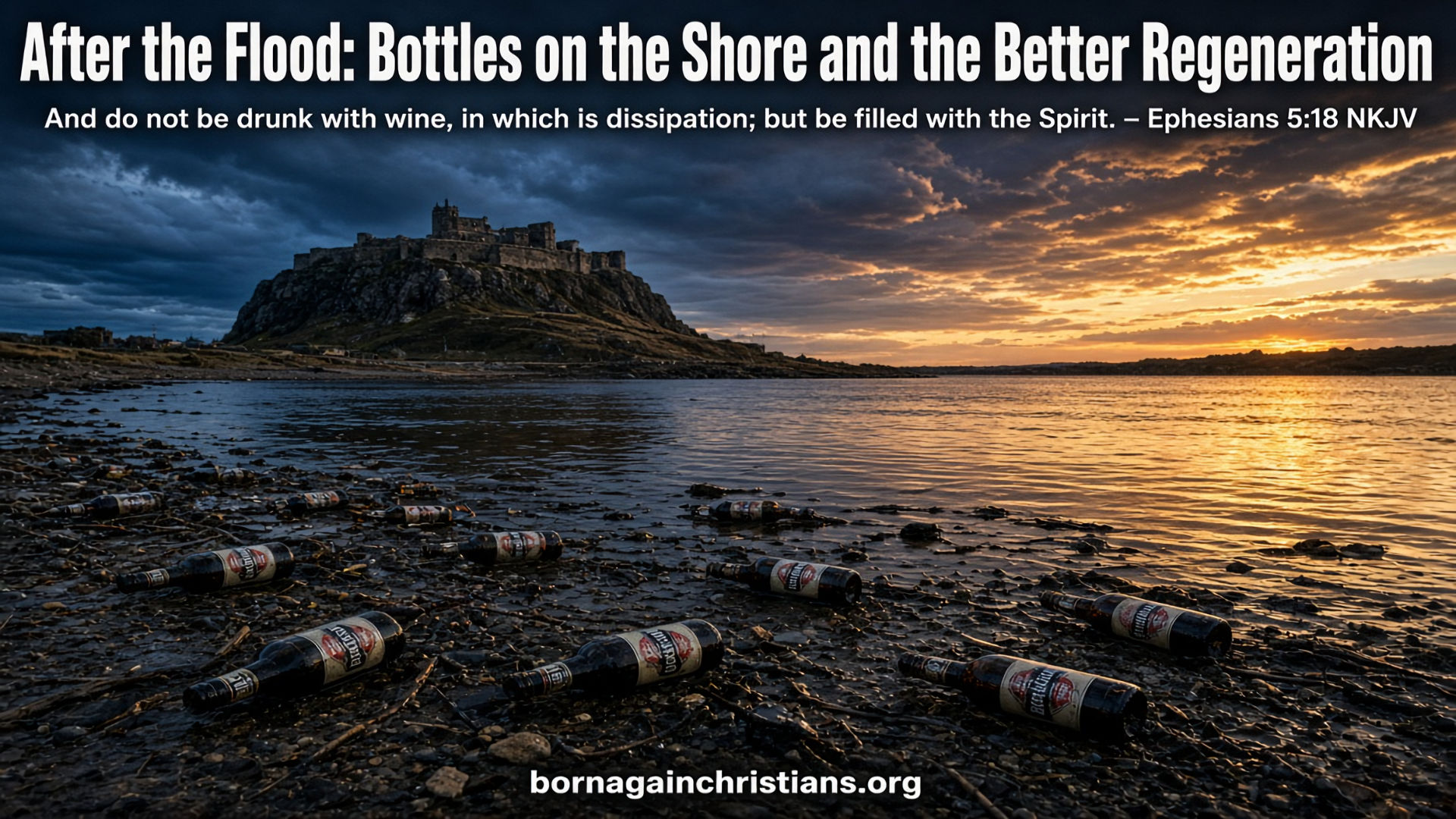
Folks, after Storm Boelo the River Leven carried a lot of debris onto the shores around Dumbarton. Among all that wreckage were a striking number of empty Buckfast bottles. A friend who ran along the water noticed them and asked, almost in disbelief, how many bottles a river can wash up if they start further upstream or come in on the tide. The sight is hard to miss. Levengrove Park, the streets of Dumbarton, Renton and Balloch all tell the same story: people drinking in the open, bottles thrown into the water, lives being worn down by something cheap and hard-hitting.
Here in West Dunbartonshire sits near the top of Scotland’s list for alcohol-related harm. Over recent years the alcohol-specific death rate here has been among the highest in the country, alongside places such as Glasgow, Inverclyde and North Lanarkshire. The poorest communities carry the heaviest load. Hospital admissions and deaths linked wholly to alcohol are several times higher in the most deprived areas than in the least. The bottles on the shore are not just litter. They are the visible edge of a deeper bondage.
What the Word says
The Scripture does not leave us guessing, folks. “Wine is a mocker, strong drink is raging, and whoever is deceived by it is not wise” (Proverbs 20:1, NKJV). As this verse suggests—and as I’ve experienced firsthand—alcohol can mock and torment those affected by it. We see this on the streets as people leave pubs, or hear people having barnies through the walls. Many men and women have seen alcohol bring mockery and conflict into their lives, and it can be painful to witness.
Drunkenness is listed among the works of the flesh that do not inherit the kingdom of God (Galatians 5:19-21). Paul draws the line clearly: “And do not be drunk with wine, in which is dissipation; but be filled with the Spirit” (Ephesians 5:18). Scripture fully condemns drunkenness, as we see in Proverbs 20:1 and we will see in a moment in 23:29-33. To choose to be impaired by drink, even with the intention of becoming impaired, is to step outside of wisdom. A glass of wine taken simply to help you relax is still impairing yourself, because alcohol is a depressant. It affects self-control, wisdom, balance and judgment.
In Ephesians 5 we are shown that drunkenness is simply a waste—dissipation of time, strength and resources that could have been given to Jesus. The Holy Spirit works the opposite way. He is the true stimulant, lifting and directing every part of our life toward what is good and useful. When Paul says “be filled with the Spirit” in verse 18, he is speaking of an ongoing, continuous filling. It is not something that happens once and is finished. It is the daily, repeated asking for and receiving of the Holy Spirit’s power and presence.
I know you are still going to say to me that the Bible does not call every drop of alcohol sin. But Scripture gives repeated, sober warnings. Strong drink bites at the last. It leads to sorrow, strife and wounds without cause (Proverbs 23:29-35).
As Christians, our liberty in Christ is always governed by love so that a weaker brother does not stumble; don’t serve pure alcoholic wine at communion. (Romans 14:21). For those who have known the grip of alcohol, and for those who Pastor or lead in church in any way, the freest and safest path is often total abstinence from drink. It is not legalism but actually walking in wisdom so the enemy has no foothold and the testimony stays clear.
I have known the bondage myself for many years. I do not drink now. The thought of a pastor holding a bottle in one hand and a Bible in the other does not sit well with me, it makes me cringe. The hands of a servant of God are better occupied with the Word and with the work of the Spirit. “Do not be drunk with wine… but be filled with the Spirit.” That contrast still stands.
Streets that need regeneration
The towns near where I live, in West Dumbartonshire, they truly need physical regeneration with cleaner streets, better opportunities, and work that lifts the community. Those things matter but yet a change of surroundings is not enough, if the heart stays the same. Jesus said, “Most assuredly, I say to you, unless one is born again, he cannot see the kingdom of God” (John 3:3). That new birth is the real regeneration.
The necessity of being born again means receiving new life. The word “regeneration” can sound theological and hard to grasp. Some think it only means moral or religious reform, but it is not that. It is the bringing of new life. Jesus makes it plain: without this new birth a person cannot enter or be part of the kingdom of God. Self-improvement is not enough; one must be born again.
“Therefore, if anyone is in Christ, he is a new creation; old things have passed away; behold, all things have become new” (2 Corinthians 5:17). This is a promise that reaches every person. Background, nationality, language or education makes no difference. Anyone can become a new creation through Jesus Christ.
Those who belong to God are not merely pardoned. They are transformed. The new creation is a gift God freely gives, and it is received by simple faith. He works this change in us as we surrender our will and choose to trust Him. So the call is both to receive the gift and then to walk in the new life that gift brings.
Imagine a sturdy kitchen chair in front of you, believe the chair is strong enough to hold you. You can even talk about how reliable it is. But it does not hold you until you sit down on it. Faith is sitting down. It is not just agreeing that Jesus is able to make you a new creation; it is resting your weight on Him, trusting Him to do what He has promised.
Only the good news of Jesus breaks the hold that fills the bottles in the first place. Only Christ sets a person free from the mockery of wine and strong drink and fills them with the Spirit instead. When hearts are made new, the streets themselves begin to change.
People stop casting their lives into the river. Young people discover a better path. Homes are restored. The light of the gospel begins to shine in places long marked by darkness.
The better life
Just as in our day, so in Jesus’ day there were unfaithful shepherds and leaders who did not care for the people. Jesus said the thief comes only to steal, and to kill, and to destroy. But He came that we might have life, and have it more abundantly (John 10:10).
That life is not found at the bottom of a bottle. It is found in Him. Those who have been washed, sanctified and justified in His name can say, “such were some of you” (1 Corinthians 6:11). Old things pass away. All things become new.
The bottles washed up after the storm, and the ones left in the snow on a mountain path up Goatfell years ago, are sad reminders of what the world reaches for. They are also open doors. The same Lord who delivers from that bondage is still setting captives free. He is able to open eyes in West Dumbartonshire. He is able to regenerate hearts and fill people with His Spirit.
If you are still struggling, reach out. Jesus is in the business of setting captives free. Stay in the Word. Ask the Holy Spirit to fill you afresh. Surround yourself with believers who will encourage you in a holy walk. There is abundant life in Christ. You will not find it at the bottom of a bottle. You find it in a surrendered walk with Him, filled with His Spirit.
Let us glorify God in our bodies and walk soberly as we await the soon return of our Lord. “Be sober, be vigilant; because your adversary the devil, as a roaring lion, walks about, seeking whom he may devour” (1 Peter 5:8).
A prayer
Father we come before you, thank You for delivering us from the power of sin and for the freedom we have in Christ. As I have shared, please help us to live soberly and righteously in this present world. Give us wisdom to make choices that honour You and protect our brothers and sisters.
Fill us afresh with Your Holy Spirit so that our lives would be a clear witness to the joy and peace found only in Jesus. Open the eyes of these towns and regenerate hearts. Set captives free. In the mighty name of our Lord and Saviour, Amen.
Peter













Add comment